
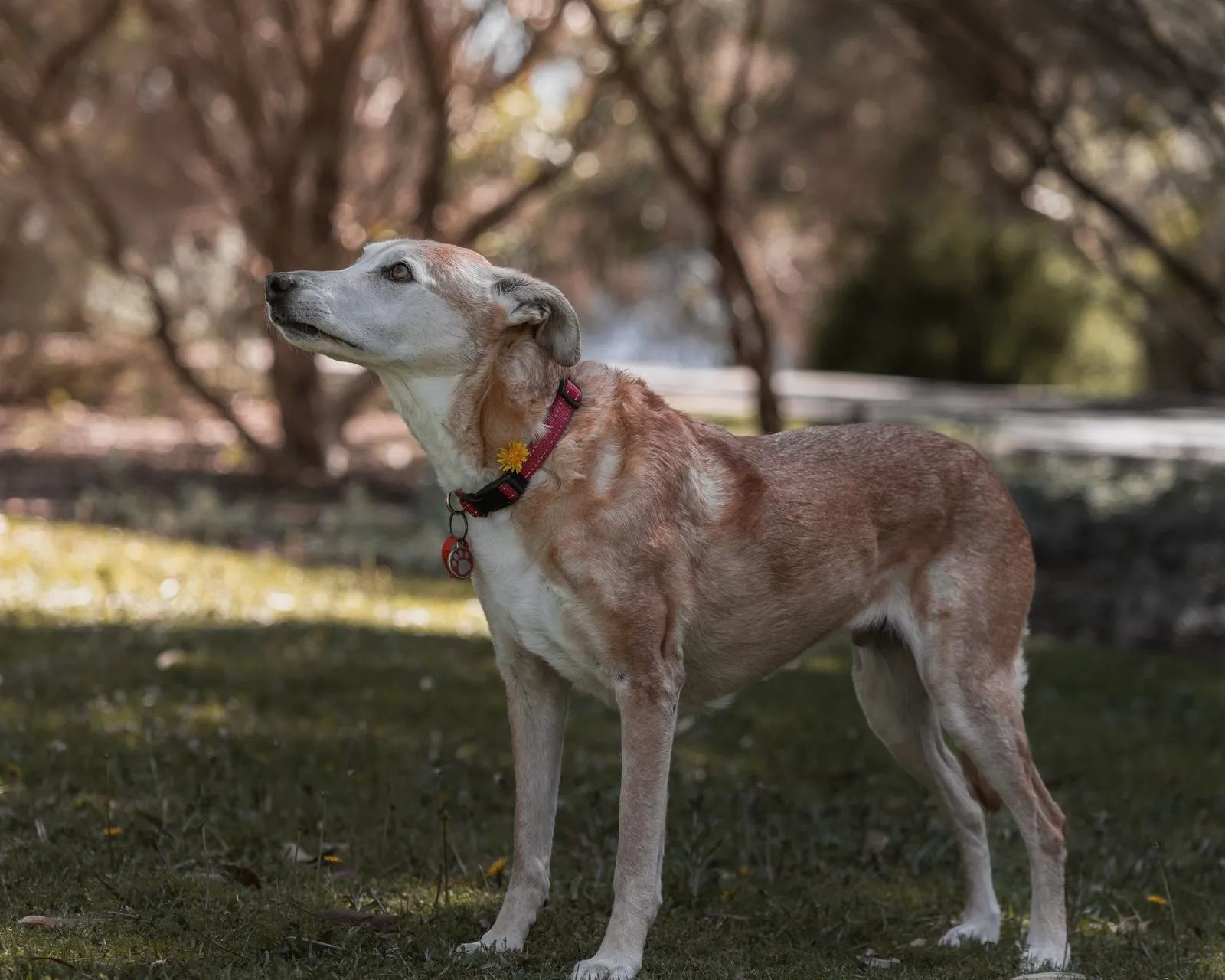
A familiar walk can feel different as a dog gets older. Your dog may lag behind, stop more often, or seem stiff after coming home. These changes can be easy to dismiss as a slower pace, but they can also signal that the route, distance, or timing needs to change. Watch how your dog moves before, during, and after each outing. Small adjustments can help preserve the comfort and enjoyment of daily walks.
Notice Changes in Pace
Compare your dog’s current pace with their usual rhythm, not with another dog’s. Signs they may need more time include lagging on a familiar route, stopping to rest, falling behind, or taking longer to get moving after a pause. Pay attention to whether the change happens throughout the walk or mainly on hills, stairs, or uneven ground.
A slower pace does not always mean your dog should stop walking. Let them set the speed and avoid tugging them forward to keep a schedule. Choose a route with level paths and places to pause. If your dog repeatedly struggles to keep up, shorten the outing and ask your veterinarian whether a health check is appropriate.
Track Stamina and Recovery
Notice how far your dog walks comfortably before slowing down or seeking a break. A route that was manageable last season may now be too long, especially in hot, cold, or wet weather. Try a shorter loop and see whether your dog stays engaged without needing to stop repeatedly.
Recovery matters as much as what happens outdoors. After a walk, look for unusual panting, persistent tiredness, reluctance to get up, or stiffness that lasts longer than usual. Keep a simple note of the route, conditions, and how your dog seemed afterward. A pattern can help you choose a better distance and give your veterinarian useful details.
Read Comfort Cues
Your dog may communicate discomfort through behavior rather than a clear limp. Watch for a shortened stride, favoring one side, repeated paw licking, reluctance to turn, or hesitation before a curb. Also notice changes in posture, facial expression, and interest in sniffing or exploring.
If your dog shows sudden pain, cannot bear weight, has trouble breathing, or seems distressed, end the walk and contact a veterinarian promptly. For less urgent but recurring changes, arrange a veterinary appointment instead of assuming they are simply part of aging. A professional can help identify discomfort and recommend safe activity.
Adjust the Walk, Not Just the Pace
Use your dog’s cues to tailor each outing. Shorter, more frequent walks may work better than one long trip. Choose flat, familiar routes, build in sniffing and water breaks, and avoid the hottest part of the day. If your dog slows or turns home, follow that signal rather than insisting on finishing the planned distance.
Keep the routine flexible from day to day. Weather, sleep, and comfort can affect how much your dog wants to walk. Use a well-fitted harness if it helps you guide them gently, and check paws and coat after outings. Steady Paws Toronto offers senior dog walking support in Toronto; discuss your dog’s needs and preferred pace with any walker you hire.
A slower walk can still be a rewarding walk. Use changes in pace, stamina, and comfort to guide the distance, route, and number of breaks, and share persistent or sudden changes with your veterinarian. With a flexible routine, your senior dog can keep enjoying outdoor time at a pace that suits them.